An airbrush wholesale supplier should do more than provide a price list. The supplier must translate a target market into stable models, controlled accessories, approved packaging and repeatable production records that survive the second and third order.
This guide is written for distributors, importers and private-label brands comparing wholesale airbrush manufacturers. It provides a practical process for building the assortment, approving samples, normalizing quotations, defining quality checks and protecting repeat-order consistency.
Define the buying project before requesting quotations
A broad message asking for “your best airbrush” forces suppliers to guess. Different factories may quote completely different platforms, packages and inspection levels, making the prices impossible to compare. Begin with a short commercial and technical brief.
| Brief section | Information to provide | Why it changes the offer |
|---|---|---|
| Target user | Beginner, hobbyist, beauty professional, cake decorator, artist or industrial user | Controls trigger format, nozzle range, cup, instructions and accessories |
| Sales channel | Marketplace, specialist retail, distributor, training school or direct brand site | Affects packaging, barcode, content, spares and assortment depth |
| Target region | Countries, voltage where relevant, language and compliance expectations | Changes power configuration, labeling, documentation and carton marks |
| Order plan | Sample quantity, first-order forecast and expected annual demand | Helps separate trial options from scalable production options |
| Brand scope | Stock product, logo marking, custom color, retail box, manual or structural change | Determines tooling, artwork, minimum quantity and approval stages |
| Quality target | Key functions, appearance limits, test method and reporting needs | Allows the supplier to quote the work needed to achieve the standard |
A clear brief does not need to be long. One page with reference photos, required components and non-negotiable checks will produce more comparable proposals than a large folder without priorities.
Build an assortment around customer jobs
Wholesale catalogs often become difficult to manage because too many similar models are added without a defined role. Start with a small architecture that answers different buying needs:
- Entry platform: simple setup, clear instructions and essential accessories.
- Core dual-action platform: balanced gravity-feed configuration for general creative work.
- Application model: nozzle, cup or control format selected for one focused market.
- Complete kit: matched airbrush, compressor, hose, fittings and maintenance tools.
- Replacement range: needles, nozzles, caps, seals, hoses and connectors identified by model.
Each stock-keeping unit should have a distinct reason to exist. If two products serve the same user at the same price, combine them or document the difference clearly. A disciplined range improves forecasting, spare-parts support and marketing content.
Shortlist the factory, not just the salesperson
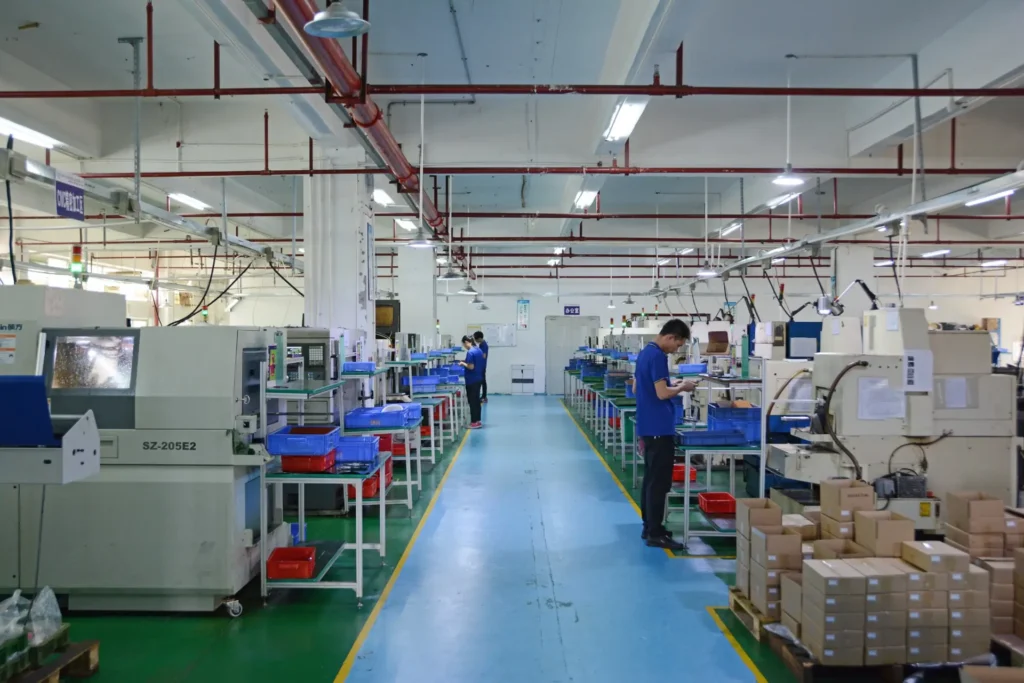
A capable airbrush wholesale supplier should be able to explain how precision parts are made, matched, assembled, tested and recorded. Ask for evidence relevant to the exact product, such as machining equipment, inspection tools, assembly flow, spray testing, leakage checks, packaging control and traceability.
Use a weighted scorecard so price does not hide operational risk:
| Supplier area | Suggested weight | Evidence to review |
|---|---|---|
| Product and process fit | 25% | Relevant models, component control, manufacturing route |
| Sample performance | 25% | Repeatable spray, trigger response, leakage, finish and compatibility |
| Quality system | 20% | Incoming, in-process and final checks; records and defect handling |
| OEM and packaging execution | 15% | Artwork control, color approval, manuals, inserts and carton data |
| Commercial and delivery control | 10% | Clear quotation, lead-time assumptions, capacity and communication |
| After-sales support | 5% | Spare parts, complaint analysis and corrective-action process |
Adjust the weights to your channel, but score every supplier against the same evidence. For a deeper factory review, use our China airbrush manufacturer audit guide.
Request a sample matrix instead of one perfect sample
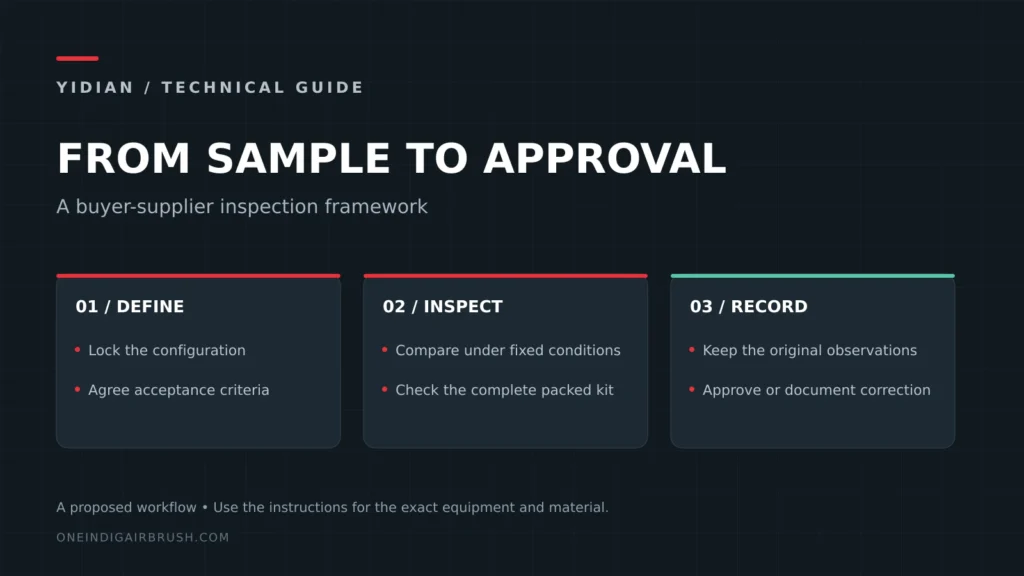
One sample can show that a design is possible. It cannot show production variation or prove the supplier understood the final bill of materials. Request enough samples to compare the factors that matter most.
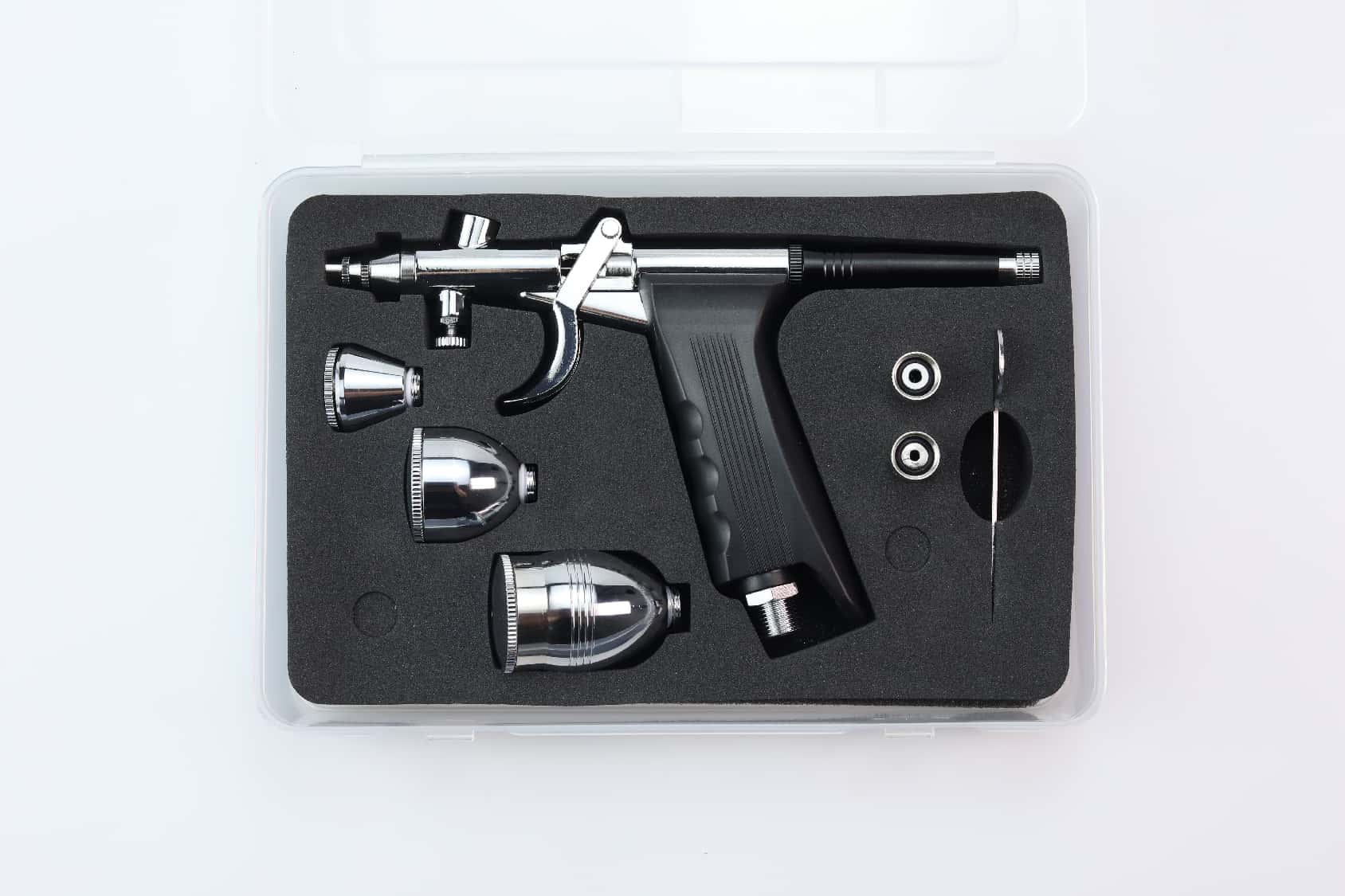
A useful matrix might include two or three airbrush bodies from the same model, the intended nozzle configuration, final hose and fittings, at least one packaging mockup and the proposed replacement parts. If color, logo or coating changes are planned, separate appearance approval from functional approval so one does not hide problems in the other.
Use one controlled sample protocol
- Record sample ID, model, nozzle, cup, hose, fittings and date received.
- Use the same safe test medium and working-pressure method for each sample.
- Check air-only operation, trigger travel, dots, lines, gradients and restart behavior.
- Inspect the needle, nozzle, cap, seals, threads, surface finish and cup cleanliness.
- Clean and reassemble the product using only the intended user instructions and tools.
- Photograph accepted appearance details and keep an approved control sample.
Do not approve a model by chat message alone. Create a signed or clearly versioned approval record that identifies the physical sample, specification, artwork and packaging revision.
When the buyer needs a wholesale airbrush sample approval protocol, connect the matrix to the airbrush sample approval process. That route separates the approved sample, retest evidence and unresolved accessory questions before the supplier quote is treated as comparable.
Normalize wholesale quotations before comparing price
Two quotations with the same model name can include different nozzles, cups, cases, hoses, instructions and inspection work. Build a line-by-line comparison covering the core tool, accessories, branding, packaging, quality work and logistics basis. Compare total landed and operating cost as well as unit price.
Keep the public shop selection and a negotiated wholesale quotation distinct. The ONEINDIG shop can help you identify a YD130 airbrush, a complete airbrush system or a YD130 retail-box direction. The displayed base-product price does not establish a volume tier, approved custom artwork, a confirmed packing list or your delivered total.
- For a sample request, identify the exact model, installed configuration and quantity. Review your selected items in the shopping cart.
- For distributor or OEM stock, provide quantities by model, destination, packaging and branding scope through the wholesale quotation request. Keep these requirements separate from a base-product cart line.
- Compare the returned quote against the approved configuration, MOQ scope and sample evidence; do not treat a single public price as a bulk-price promise.
- The current checkout submits an order for manual confirmation of configuration, stock, shipping and payment. A zero shipping placeholder is not a free-delivery commitment, and the current flow does not establish an online card or PayPal payment.
Retain the agreed model and parts, inspection scope, packing-list revision, destination and payment terms with the order reference. That makes the first sample and later stock orders comparable instead of allowing the checkout summary to replace a confirmed commercial offer.
Lock the model specification and bill of materials
Wholesale airbrush programs depend on component compatibility. The specification should identify the body, needle, nozzle, nozzle cap, cup, handle, seal set, hose thread, adapter, case and every included accessory. Use internal part codes and revision numbers where possible.
Define what the supplier may change without approval. A visually similar seal, spring or connector can affect trigger feel, leakage, chemical compatibility or fit. For repeat orders, any substitution that changes form, fit, function, appearance, labeling or compliance documentation should require written review.
For private-label development, follow the stage-gate process in our private label airbrush manufacturing checklist.
Treat packaging as a controlled product component
The package must protect precision parts, communicate the correct model and help the buyer verify contents. Needles and nozzles should not move freely. Hoses should not be forced into bends that damage fittings. Small components need closed positions, bags or labeled compartments.
Before mass production, approve:
- Retail-box dimensions, material, print colors and finish.
- Insert shape, component orientation and removal sequence.
- Model name, barcode, language, country and required warning information.
- Manual content, diagrams, replacement-part codes and contact details.
- Master-carton quantity, dimensions, gross and net weight, carton marks and pallet plan.
Pack a final sample exactly as production will be packed, then perform appropriate handling and transport checks. The goal is not only an undamaged retail box; the airbrush must still pass the agreed functional test after handling.
Write quality checks as observable results
Terms such as “good quality” or “normal spray” are not inspection criteria. Define the sample preparation, test medium, pressure condition, pattern and acceptance rule. Appearance standards should identify viewing distance, lighting, defect zones and approved boundary samples.
A practical wholesale inspection plan can cover:
- Incoming parts: dimensions, surface condition, material documents where required and supplier lot identity.
- Assembly process: part matching, seal placement, tightening method, cleanliness and operator checks.
- Functional testing: air valve, trigger movement, leakage, atomization, pattern stability and connection fit.
- Appearance inspection: plating or coating, scratches, contamination, logo and color.
- Packing inspection: model, quantity, accessories, manual, barcode, insert and carton marks.
- Shipment release: order revision, sample approval, inspection record and loading information.
Agree who owns each check and which records must be supplied. A third-party final inspection can add independent verification, but it cannot replace clear specifications or stable production controls.
Use the pilot order to test the business process
The first production order should validate more than the product. It should test artwork handoff, order confirmation, revision control, scheduling, inspection communication, packing lists, shipping documents and complaint response.
Keep the initial assortment manageable. A smaller number of clearly differentiated models gives the team more time to inspect product, prepare listings and collect customer feedback. Record defects by type and lot, not only as a total count. That information helps the supplier investigate causes before the repeat order.
Protect consistency on repeat orders
Repeat orders are where an airbrush factory relationship proves its value. Before each order, issue the latest controlled specification and ask the supplier to confirm changes in material, sub-supplier, process, tooling, color, packaging or test method.
| Repeat-order control | Record to maintain |
|---|---|
| Approved construction | Model specification, bill of materials and approved control sample |
| Appearance | Color standard, logo proof, finish limit and dated photos |
| Function | Test method, equipment, medium, pressure condition and acceptance criteria |
| Packaging | Artwork files, dieline, insert, manual, barcode and carton specification |
| Change control | Change request, reason, affected lots, validation and approval |
| Performance history | Inspection results, complaints, corrective actions and replacement data |
Review this package before confirming the purchase order. If the product performs differently from the approved sample, compare records and components before adjusting inspection criteria to accept the change.
Plan spare parts and claims before launch
Needles, nozzles, caps, seals, hoses and connectors are part of the commercial offer. Decide which parts will be stocked, how they will be labeled and which models they fit. Include clear replacement guidance so customers do not damage precision components during service.
Agree a claim process with the wholesale airbrush manufacturer: information required, response time, sample return, root-cause analysis, corrective action and replacement or credit rules. Photos are useful, but lot code, model, use condition and symptom make the investigation far more effective.
Red flags during supplier development
- The supplier changes model details between quotation, sample and order confirmation.
- A single airbrush is presented as proof of stable production without repeat samples.
- No one can identify needle, nozzle, seal or connector compatibility by part code.
- Packaging dimensions and carton data remain estimates after the product is approved.
- Functional acceptance is described only as “works” without a repeatable test method.
- Substitutions are treated as normal even when they change performance or appearance.
- Complaint discussions focus on blame before the lot, sample and failure mode are confirmed.
A 30-day supplier qualification plan
- Days 1-5: issue the brief, target assortment and quotation template.
- Days 6-10: compare factory evidence, product fit and normalized quotations.
- Days 11-18: receive multiple samples and run the controlled test protocol.
- Days 19-23: confirm the model specification, bill of materials and replacement parts.
- Days 24-27: approve logo, package, manual and carton data by revision.
- Days 28-30: close open issues, define quality checks and plan the pilot order.
The calendar may change with tooling and customization, but the sequence should remain: define, compare, test, lock, verify and then scale.
Use a three-stage wholesale inquiry brief
When a buyer is ready to contact an airbrush factory, the inquiry should separate the first sample question from the production-quality question and the repeat-order question. This gives the supplier a practical path to answer without guessing the final configuration.
| Stage | What to request | What the supplier should confirm |
|---|---|---|
| Sample plan | Target model, nozzle range, cup or feed type, accessories, package scope and sample quantity | Which configuration can be sampled, which parts are stock, and which items require artwork or setup |
| Quality plan | Working-pressure method, spray-card check, leakage check, appearance limit, packing check and record format | How the factory will test the sample and pilot order before shipment |
| Reorder plan | Forecast range, spare parts, carton data, change-control rule and complaint feedback process | How the approved specification, packaging revision and replacement parts will be preserved |
For technical preparation, buyers can pair this brief with the airbrush nozzle size guide and the complete airbrush kit checklist. Then send the filled brief through the YIDIAN wholesale inquiry form so the reply can focus on sample feasibility, quality checks and repeat-order control.
Include the application, target market, estimated first order, sample configuration, required accessories, packaging scope and any non-negotiable inspection checks. If those items are not fixed yet, state the uncertainty instead of forcing a false specification.
Keep the first message practical: intended buyer channel, preferred sample family, accessory scope, inspection point and repeat-order question. Do not turn an early sample request into a fixed price, MOQ or delivery commitment before YIDIAN confirms the configuration.
Convert the sample order into reorder evidence
Airbrush distributor reorder planning starts before the first commercial order. Give each sample configuration a durable reference, then carry the approved product, packaging and support decisions into the pilot order. This avoids rebuilding the specification from an old quotation when a buyer needs replenishment.
| Decision stage | Record now | Use at reorder |
|---|---|---|
| Sample | Configuration, intended channel, test conditions, observations and open issues | Confirm which sample became the controlled reference |
| Pilot order | Final BOM, artwork, pack-out, inspection result and approved deviations | Separate accepted exceptions from permanent specification changes |
| Sell-through | SKU-level replenishment, service-part demand and complaint categories | Adjust the range using identifiable records rather than anecdotes |
| Repeat order | Forecast, requested changes, effective revision and verification owner | Release only the agreed version and retain comparison evidence |
A wholesale airbrush sample order should name the model, configuration, accessories, package state and questions it is intended to answer. Build the later airbrush supplier replenishment plan around approved SKUs and compatible service parts, not around a general promise that stock will remain available.
Maintain a bulk airbrush order quality record for the pilot and each repeat lot, keeping requirements separate from observed results and disposition. Pair the record with the complete-kit BOM guide and sample quality checklist, then prepare the next request in the distributor buying-brief builder.
Use one onboarding pack for the first order and the reorder
An airbrush wholesale supplier onboarding pack should not be a supplier brochure. It should be the buyer’s controlled file for the selected range, sample evidence, quotation assumptions, service parts and open decisions. The same pack should be updated before a repeat order so the buyer is not negotiating from memory.
| Buyer file | What to include | Reorder use |
|---|---|---|
| Sample comparison | Airbrush distributor sample comparison matrix with model, nozzle, pack, test conditions and observed differences | Identify which sample became the controlled reference. |
| Commercial scope | Included accessories, packaging, inspection work and unresolved buyer decisions | Compare only like-for-like quotations when volumes change. |
| Support scope | Replacement parts, compatibility notes and complaint information needed by the supplier | Keep the retailer support file aligned with the approved product. |
| Risk register | Airbrush wholesale reorder risk checklist for substitutions, packaging revisions and lot-level feedback | Prevent quiet changes from entering the second or third order. |
Link the onboarding pack to the RFQ evidence preflight, the kit launch handoff and the reseller buying brief. Keep uncertain quantities, target markets or private-label requests visible as open items; they should not be converted into fixed scope until the buyer confirms them.
Plan service parts before the first reorder
An airbrush distributor service parts plan turns after-sales support into part of the buying decision. Decide which needles, nozzles, caps, seals, hoses and connectors will be stocked, which models they fit and how a customer should identify the correct replacement before a reorder is placed.
| Planning item | Ask the supplier | Record for reorder |
|---|---|---|
| Replacement range | Which parts are available as normal service stock? | Retail SKU, factory part code and compatible model revision. |
| Quotation scope | Are the quantities for complete kits, individual spares or conversion sets? | Airbrush spare parts quotation checklist with units, pack format and labels. |
| Warranty feedback | What information is needed before credit, replacement or corrective action? | Lot, symptom, photos, returned part and disposition. |
| Substitution rule | What happens if a seal, hose, fitting or head component changes? | Change request, sample comparison and approval owner. |
Service parts do not need to turn every distributor into a repair center. They need to make common replacement needs visible before the product launches, so the first repeat order can include spares, labels and instructions that match the approved range.
Build the wholesale evidence pack before bulk pricing
An airbrush wholesale supplier evidence pack should be ready before the buyer asks several suppliers for bulk pricing. It keeps sample observations, accessory choices, packaging scope and support parts in one comparison file instead of relying on a broad request for the lowest unit cost.
| Evidence pack section | What to include | Why it matters |
|---|---|---|
| Sample route | Airbrush distributor sample routing with model, nozzle, accessory pack, intended sales channel and open questions | Shows whether the sample was for fit, function, package review or a reorder decision. |
| Quote intake | Bulk airbrush quote intake checklist covering included parts, pack-out, inspection work, service parts and unresolved assumptions | Prevents one supplier from pricing a smaller scope than another. |
| Repeat support | Replacement-part labels, complaint information required by the supplier and change-control rule | Connects the first order to the reorder file instead of starting over. |
Use the evidence pack with the factory RFQ route, the sample approval package and the reseller buying brief. Do not turn estimated first-order volume, MOQ, freight terms or delivery timing into claims until the supplier confirms them for the approved configuration.
Normalize MOQ before comparing wholesale quotes
A wholesale airbrush MOQ comparison is useful only when every supplier is quoting the same scope. Ask whether the minimum applies to standard product, branded product, packed retail kits, spare parts, or a mixed opening assortment. Otherwise a low minimum can hide missing packaging work or unsupported replacement parts.
| Wholesale quote field | Normalize before comparison | Open item to retain |
|---|---|---|
| Opening assortment | Model family, quantity per SKU and sample approval status | Which SKU becomes the controlled reference? |
| Brand and pack scope | Logo, color, box, manual, insert and carton assumptions | Which packaging items are still only estimates? |
| Service parts | Needle, nozzle, seal, hose and connector packs | Which parts have separate minimums or labels? |
Use this distributor airbrush MOQ quote scope with the airbrush OEM MOQ guide before finalizing the buying brief. Keep target volume, price, delivery timing and freight assumptions separate from confirmed supplier terms.
Use product clicks to build the wholesale intake brief
A wholesale product click intake brief should translate product-family interest into supplier-review fields. Instead of sending a broad request for a price list, identify which family the buyer explored, what problem the assortment must solve, and which sample or support question remains open.
| Intake field | What to record | Where it routes |
|---|---|---|
| Airbrush distributor product family handoff | Airbrush model family, complete kit interest, compressor need, accessory or service-parts requirement and target channel | Routes to the product range, YD182 wide-range airbrush or complete-kit review. |
| Sample decision | Which product should be sampled first, which variants are only options, and what evidence the buyer needs to compare | Connects to the sample approval process. |
| Open commercial fields | Quantity, private label scope, packaging, terms and timing that still need supplier confirmation | Keeps unconfirmed terms out of public copy and early RFQ notes. |
For a distributor building a first assortment, review the airbrush product range, the complete kit option, the TC20T tank compressor order notes, the TC18F compressor order notes and the reseller buying brief together. The goal is to tell the supplier which product family, sample route, air-source choice and support-parts scope should be answered first, not to force a finished order from one page visit.
Frequently asked questions
What information should I send an airbrush wholesale supplier first?
Send the target user, application, countries, sales channel, desired models or kit type, customization scope, first-order estimate and required quality checks. Include a target price only with the required configuration so suppliers do not remove important components to reach it.
How many samples should a buyer test?
Test more than one sample of the proposed production model. The exact number depends on risk and project size, but the purpose is to compare consistency as well as design. Include final accessories and packaging before production approval.
Is the lowest wholesale price usually the best offer?
No. Normalize product configuration, accessories, branding, packaging, quality work and logistics first. The better commercial decision is the offer that can meet the required product and repeat-order standard at a sustainable total cost.
What should be locked before a repeat order?
Lock the model specification, bill of materials, approved sample, functional test, appearance standard, artwork, manual, insert and carton data. Require review of changes that affect form, fit, function, appearance or documentation.
Choose a supplier that can preserve the approved product
A strong wholesale airbrush manufacturer helps the buyer reduce uncertainty from sampling through repeat orders. The evidence is visible in clear parts, controlled revisions, repeatable tests, protected packaging and a practical response when something changes.
Turn an airbrush kit retail assortment into a supplier brief
Separate the opening range from later additions. Record the intended buyer, one coherent kit configuration, the accessories that must match, the market, and the information a retailer will need after the sale. Use an airbrush supplier comparison brief to ask each supplier the same questions; a longer accessory list alone does not establish a better offer. Keep sample approval, packaging revision and replacement-part identification visible alongside the quotation.
The distributor buying-brief builder provides an editable starting point without an email gate. Review it, add your market and quantity, and only then send an inquiry. For a proposed inspection record, see the sample quality-control checklist.
YIDIAN is a China airbrush manufacturer supplying airbrushes, mini compressors, accessories and complete OEM/private-label kits. Review our airbrush product range and OEM/ODM capabilities, then send your wholesale project brief for a sample and quotation plan.